
NEW DELHI | OCTOBER 21, 2026
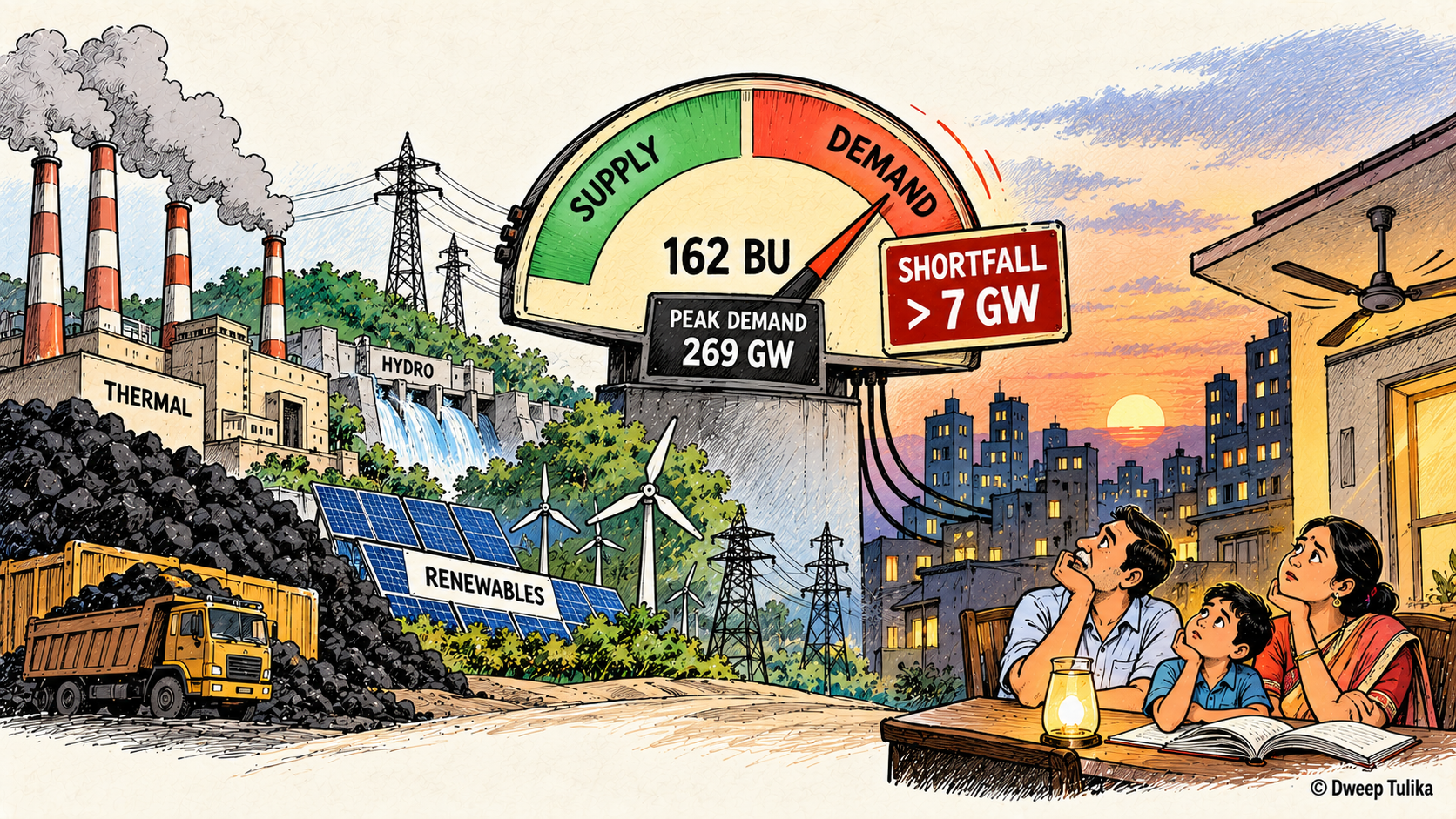
India’s electricity consumption rose by around 11 per cent year-on-year to 162 billion units (BU) in September 2026, while the evening peak power shortfall exceeded 7 gigawatts (GW), highlighting pressure on the country’s electricity supply system.
According to a report by JM Financial cited by financial news outlets, peak power demand increased by 17 per cent to 269 GW during the month. Total electricity generation also rose by approximately 11 per cent to 173 BU.
The figures point to a growing challenge in matching electricity supply with demand, particularly during evening hours when solar generation declines and the power system must rely more heavily on other sources.
Hydropower Decline Increases Pressure on Thermal Generation
Hydropower generation fell by 16 per cent year-on-year to 19 BU in September, according to the report. The decline increased the need for electricity from conventional sources, particularly thermal power plants.
Thermal power generation rose by 16 per cent to 118 BU during the month. Coal-based power plants also operated at a higher level, with their monthly plant load factor (PLF) increasing to 69 per cent from 62 per cent a year earlier.
Plant load factor measures the electricity generated by a plant relative to the amount it could produce at full capacity over the same period. The increase indicates greater utilisation of coal-based generation capacity.
The reduction in hydropower output has added pressure to conventional power sources, particularly during evening peak hours when solar generation falls and demand may remain elevated.
Coal Stocks at Power Plants Fall Sharply
The increase in thermal generation coincided with a substantial decline in coal inventories at power plants.
Coal stocks reportedly fell by around 60 per cent year-on-year to 19 million tonnes, compared with 47 million tonnes a year earlier, according to the JM Financial report cited by media outlets.
Lower inventories can reduce the buffer available to thermal power plants if fuel deliveries are disrupted or demand rises further. The reported decline therefore adds to concerns about fuel availability and the reliability and cost of electricity generation during periods of high demand.
However, coal stocks held at power plants should be distinguished from the country’s total coal inventories, which include supplies held elsewhere in the production and distribution chain.
Renewable Energy Output Also Rises
Renewable energy generation increased by 13 per cent year-on-year to 29 BU in September, according to the report.
Despite this growth, the evening supply shortfall highlights the challenge of matching generation with demand throughout the day. Solar power contributes during daylight hours, but its output falls after sunset, requiring other sources or stored electricity to meet demand.
Strengthening electricity storage, improving transmission infrastructure, maintaining power plant availability and ensuring adequate fuel supplies are among the measures that can help the power system manage fluctuations in renewable generation and changing demand patterns.
What the Figures Mean for India’s Power Supply
The September figures reflect a period of elevated electricity demand, lower hydropower generation and increased reliance on thermal power. Together, these factors placed pressure on the supply system during evening peak hours.
A reported peak shortfall does not automatically mean every region experienced power cuts. Actual supply conditions can vary by state, time of day, available generation and transmission capacity.
The extent to which the pressure continues will depend on weather conditions, fuel availability, generation performance and the pace at which storage and grid infrastructure are strengthened.
India’s September power data underline the importance of ensuring that electricity supply can keep pace with demand not only in terms of total generation, but also when consumers need power most.