
NAGPUR | OCTOBER 20, 2026 | DWEEP TULIKA | NATIONAL
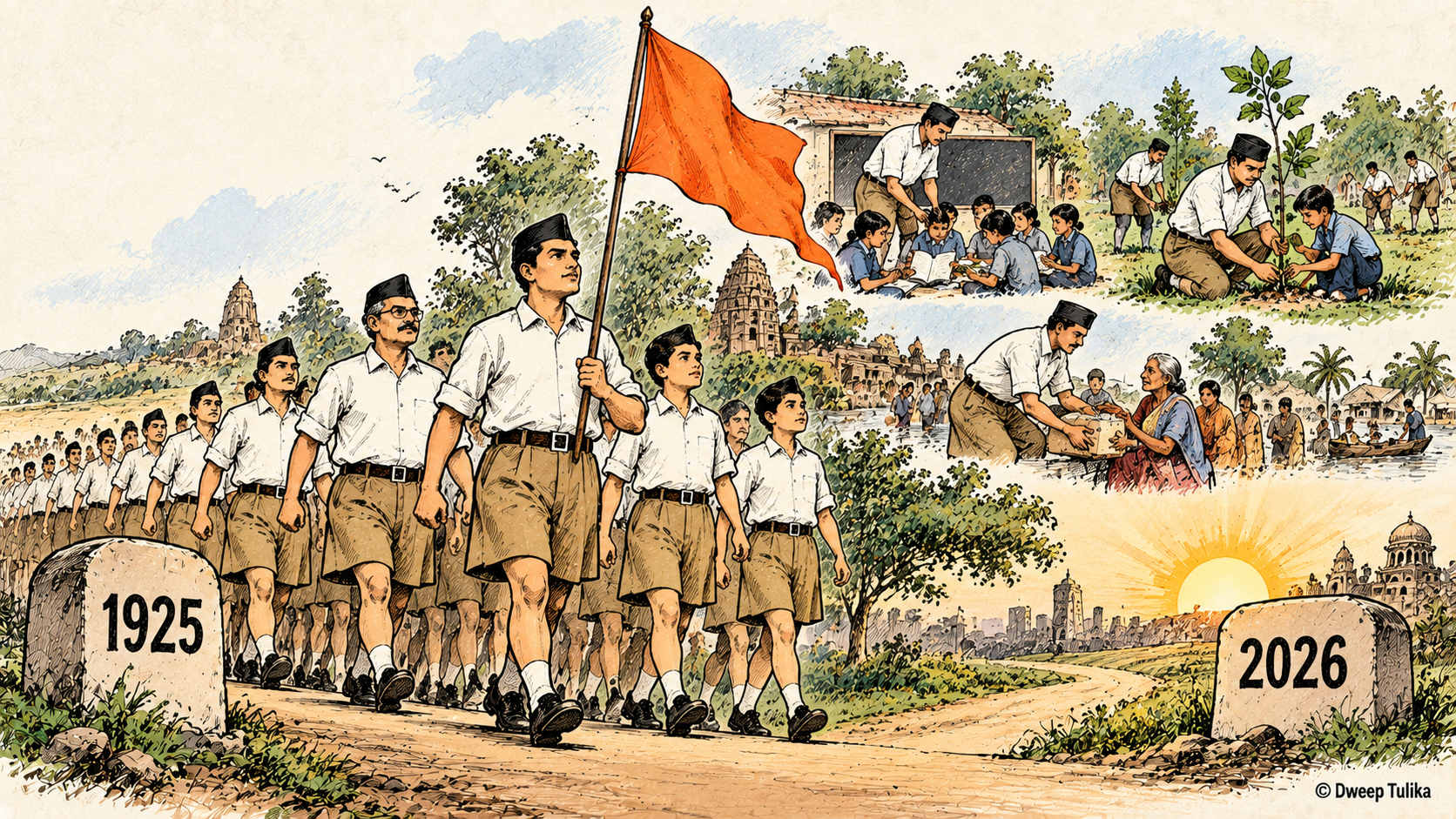
The Rashtriya Swayamsevak Sangh (RSS), founded in Nagpur in 1925, is marking its 101st year as an organisation, with its Vijayadashami programme on October 20, 2026, bringing its centenary celebrations to a close. Over the past century, the organisation has built a wide network of volunteers and associated bodies, while continuing to promote its stated objectives of social organisation, discipline, character-building and cultural nationalism.
Founded by Dr Keshav Baliram Hedgewar, the RSS began with the aim of organising Hindu society and strengthening a sense of collective identity. Its approach places emphasis on regular volunteer activities, personal discipline, community engagement and the preservation of what it describes as India's civilisational and cultural traditions.
The RSS motto and its vision
The RSS is associated with the Sanskrit motto “परं वैभवं नेतुमेतत् स्वराष्ट्रम्” — commonly understood as expressing the aspiration to take the nation to the highest level of glory.
For the organisation, this vision involves more than political independence or economic development. Its stated philosophy stresses cultural self-awareness, social cohesion, national service and the strengthening of society through organised voluntary work.
The RSS describes its mission as building a disciplined and organised Hindu society, which it believes is essential to India's unity and progress. Its understanding of national identity is rooted in Hindu cultural traditions. This vision is central to its work and also forms an important part of public discussions about its role in India's social and political life.
Shakhas: The foundation of the organisation
One of the most recognisable features of the RSS is its shakha, a regular local gathering where volunteers participate in physical exercises, games, group activities, discussions and activities intended to develop discipline and teamwork.
The organisation views shakhas as a means of building character, leadership, mutual cooperation and a sense of responsibility towards society. Through these gatherings, it seeks to develop volunteers who can contribute to community activities and organisational work.
The shakha system has helped the RSS establish a presence across different parts of India. The organisation's emphasis on regular participation and local-level networks has been a key feature of its development over the decades.
Social service and community engagement
The RSS and volunteers associated with its wider network participate in a range of activities described by the organisation as social service. These include relief and rehabilitation work during emergencies, educational initiatives, health-related activities, community outreach and programmes intended to support disadvantaged groups.
The organisation's centenary-year programme has also highlighted five initiatives collectively known as Panch Parivartan: social harmony, family awareness and values, environmental protection, self-awareness and Swadeshi, and civic discipline.
These themes reflect the RSS's stated belief that social change begins with individual conduct, family life and community participation. The organisation argues that sustained voluntary action can help build stronger communities and encourage citizens to take greater responsibility for public life.
A wider network of organisations
Over time, organisations associated with or influenced by the RSS's ideology have emerged in several areas of public life. These include the Bharatiya Janata Party (BJP), the Akhil Bharatiya Vidyarthi Parishad (ABVP), the Bharatiya Mazdoor Sangh (BMS) and Vanvasi Kalyan Ashram, among others.
These bodies operate in different fields, including politics, student activities, labour representation and community work. Their relationships with the RSS vary by organisation, but the wider network has contributed to the spread of ideas and activities connected with the Sangh's ideological tradition.
The RSS itself presents its work as primarily organisational and social, while its ideological influence and connections with political and civic organisations have made it a significant presence in India's public life.
Cultural identity and the idea of Hindu Rashtra
A central element of the RSS worldview is the belief that India's national identity is deeply connected with its Hindu civilisational heritage. The organisation advocates a strong and organised Hindu society and uses the idea of Hindu Rashtra to describe its vision of India's cultural and national identity.
The RSS explains this concept in civilisational and cultural terms rather than simply as a system of government. Its supporters see the vision as a way to strengthen social cohesion, cultural continuity and national confidence.
The concept, however, remains an important subject of public debate because of differing interpretations of Indian nationalism, constitutional secularism, religious diversity and the relationship between cultural identity and citizenship. Understanding the RSS therefore requires recognising both its stated philosophy and the broader discussions surrounding its vision for the country.
A century of organisational growth
From its beginnings in Nagpur in 1925, the RSS has developed into a large volunteer-based organisation with a national presence. Its regular shakhas, community networks, associated organisations and emphasis on disciplined volunteer participation have been central to that growth.
As it enters its 101st year, the organisation continues to present social organisation, service, cultural awareness and character-building as key elements of its mission. Its centenary celebrations have also provided an opportunity to publicise its activities and outline priorities for the years ahead.
The RSS's own account of its journey places particular emphasis on volunteer commitment, service and the organisation of society. Its history and influence remain significant to understanding contemporary India, including debates about cultural nationalism, public service and national identity.
The central objective of the RSS, as described by the organisation, is to build an organised and disciplined Hindu society and work towards what it considers the nation's highest potential. Its future role will continue to be shaped by how its volunteers put these stated goals into practice and how its ideas engage with India's diverse society and constitutional framework.