
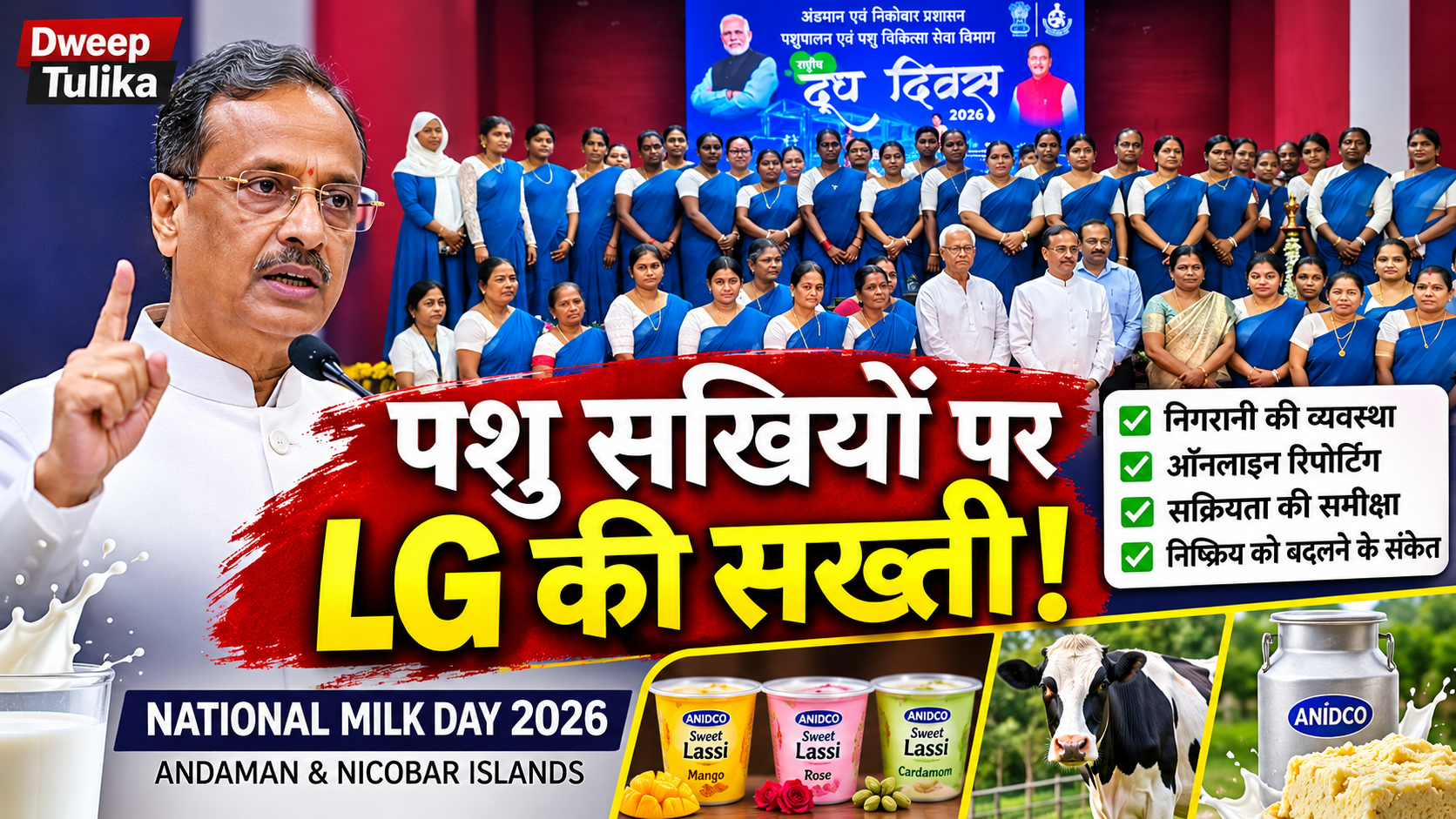
The Department of Animal Husbandry and Veterinary Services, Andaman and Nicobar Administration, observed National Milk Day 2026 at TGCE College Hall, Sri Vijayapuram, with a focus on improving dairy production, strengthening livestock services and supporting local livestock owners.
Lieutenant Governor Dr. Dinesh Sharma attended the programme as the chief guest. Member of Parliament Shri Bishnu Pada Ray, Chief Secretary Shri Gyanesh Bharti, Secretary (Animal Husbandry and Veterinary Services) Smt. Pallavi Sarkar and other senior officials were also present.
During his address, the Lieutenant Governor stressed that the Pashu Sakhi initiative must translate into regular field-level assistance for livestock owners rather than remain limited to training, uniforms and participation in official programmes.
He made the remarks after noticing some attendees, reportedly including Pashu Sakhis, leaving while he was speaking. He questioned the practice and stressed that the dignity of an event also depended on the conduct of those attending it.
LG stresses field-level accountability for Pashu Sakhis
Addressing the Pashu Sakhis, Dr. Sharma said their responsibilities should extend beyond attending programmes and receiving certificates. He urged them to visit livestock-owning households, guide farmers on animal care and bring cases of illness or unusual conditions to the attention of veterinary authorities.
The Lieutenant Governor suggested that their field activities be documented through an online reporting mechanism, where they could upload photographs and details of their visits. He also proposed regular monitoring of their work and said that those performing actively could be considered for continuation, while inactive workers could be replaced.
These were suggestions made during his address and were presented as measures to improve accountability and implementation of the initiative.
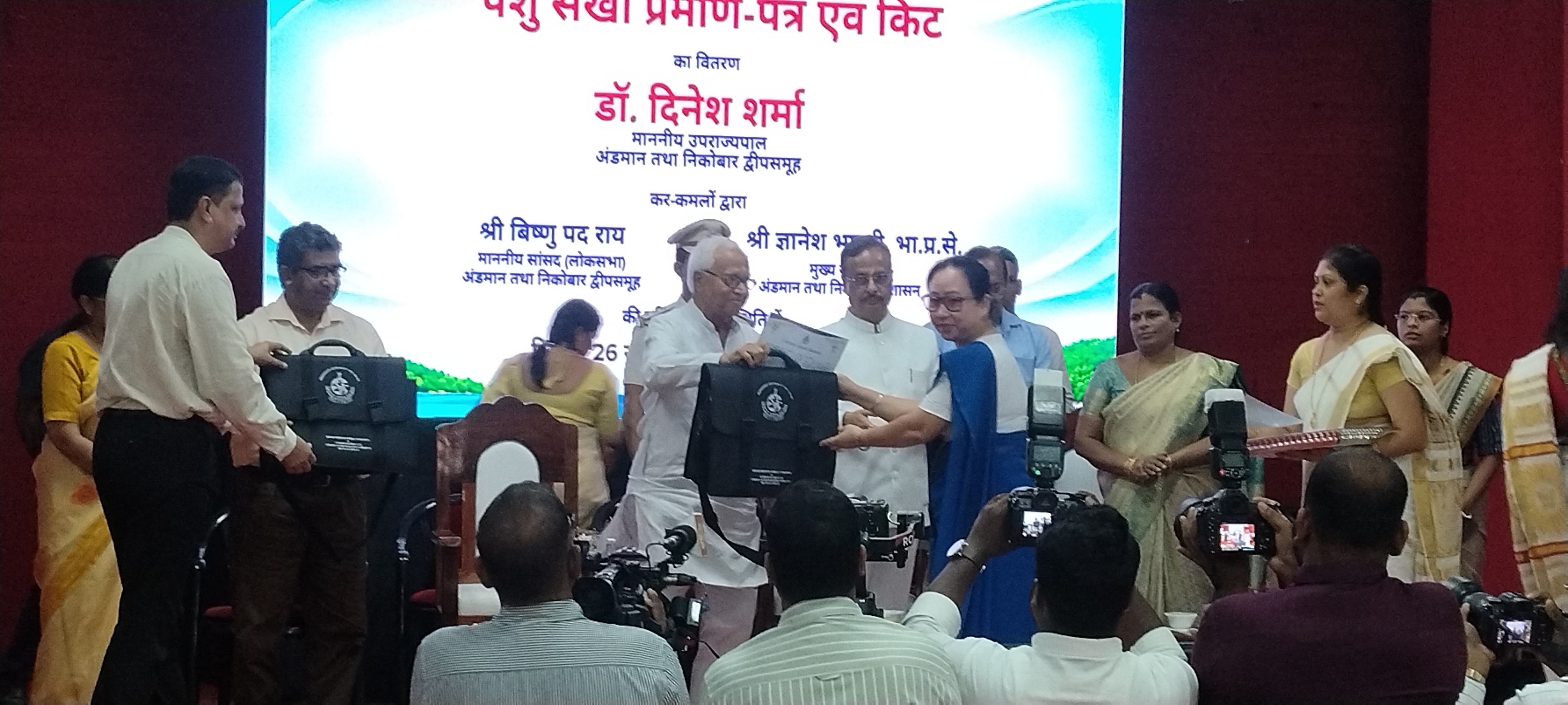
The programme included the distribution of certificates, books and other materials to trained Pashu Sakhis. The initiative involves women from rural self-help groups who have received training in basic livestock care and vaccination-related practices. The department's presentation described the programme as an effort to connect rural households with veterinary services.
Breeding technologies aimed at improving milk production
A presentation on dairy development highlighted the gap between local milk production and the islands' overall requirement. According to the presentation, local production meets approximately 10 per cent of demand, while the average daily milk yield per cow was stated to be around 4.5 litres.
The department outlined the use of sex-sorted semen under the Rashtriya Gokul Mission, introduced in July 2024, and IVF-ET technology, introduced in February 2026, to improve the quality of local livestock and increase the availability of high-yielding dairy animals.
The presentation stated that the sex-sorted semen programme had recorded 116 confirmed pregnancies and the birth of 50 female calves. Under IVF-ET, 29 pregnancies had been confirmed, with eight female calves born. It also stated that 220 recipient cows had been prepared for the programme.
The department's stated target is to improve the breed quality of dairy animals and raise average milk production to 10–12 litres per cow per day by 2040.
During the programme, the Lieutenant Governor released a policy and a publication related to the department's breeding initiative.
174 infertility-prevention camps conducted
The department also presented details of infertility-prevention camps conducted during 2024–25 to address reproductive problems among livestock and reduce financial losses for farmers.
According to the presentation, 174 camps were organised, during which 4,817 animals were examined. Nutritional deficiencies were identified as a major factor affecting reproductive performance.
To address nutritional requirements, the department developed animal nutrition kits containing chelated mineral mixture, concentrate feed, mineral blocks and other essential nutrients. The kits were distributed to selected livestock owners during the programme.
The presentation referred to approximately 12,000 crossbred cows in the islands, of which 6,173 were stated to be in milk at the time of the livestock census reference.
ANIDCO introduces new dairy products
The programme also featured the launch of new dairy products by the Andaman and Nicobar Islands Integrated Development Corporation Ltd. (ANIDCO).
The products introduced included cup-packed sweet lassi in mango, rose and cardamom flavours, buttermilk and Madhur Khoya.
A presentation on ANIDCO's dairy operations stated that the corporation procures cow milk from more than 600 local dairy farmers across South, Middle and North Andaman, providing them with a market for their produce and a source of regular income.
It also referred to the operation of 12 milk cards and milk parlours, with processed milk distributed in Sri Vijayapuram and nearby areas.
Livestock insurance scheme covers multiple animals
The programme highlighted a livestock insurance initiative being implemented under the National Livestock Mission in collaboration with Go Digit General Insurance Ltd.
The scheme covers animals including cows, buffaloes, goats and pigs. As explained during the programme, the government bears 85 per cent of the insurance premium, while the beneficiary contributes the remaining 15 per cent.
The Lieutenant Governor distributed insurance certificates to five livestock owners and encouraged farmers to make use of the scheme to protect themselves against losses caused by animal deaths and disease.
MP calls for better fodder and veterinary support
Addressing the gathering, MP Shri Bishnu Pada Ray appreciated the department's initiatives and called for further steps to strengthen livestock development in the islands.
He suggested promoting Napier grass cultivation to improve fodder availability and urged the department to facilitate the supply of planting material to farmers. He also referred to the need to make better use of available land and water resources for fodder cultivation.
The MP further raised the issue of improving the quality of cattle and strengthening veterinary support for livestock owners.
LG suggests wider use of livestock by-products and cattle protection measures
In his address, the Lieutenant Governor discussed the economic potential of livestock beyond milk production. He suggested exploring small-scale activities based on cow dung and other livestock by-products, including the manufacture of tiles, biogas production and possible electricity generation.
He also raised concerns about cattle being abandoned after they stop producing milk. Suggesting identification and tagging of cattle, he said owners should be held accountable for abandoning their animals.
The Lieutenant Governor called for arrangements to provide fodder and water for unowned or abandoned cattle and suggested developing cattle-protection facilities at the village or Panchayat level. Referring to the Kanha Open Project in Lucknow, he said similar arrangements could be considered on a smaller scale in the islands.
He also urged farmers to maintain a balance between commercial crops and food production. While acknowledging the economic importance of crops such as arecanut, he encouraged farmers to cultivate vegetables, fruits and grains to strengthen local food availability and reduce dependence on supplies from outside the islands.
Concluding his address, Dr. Sharma called for continuity in departmental initiatives and urged officials to ensure that programmes did not lose momentum when officers were transferred. He asked the Chief Secretary to treat the Animal Husbandry Department as a priority area and encouraged the department to continue its work on livestock development and veterinary services.
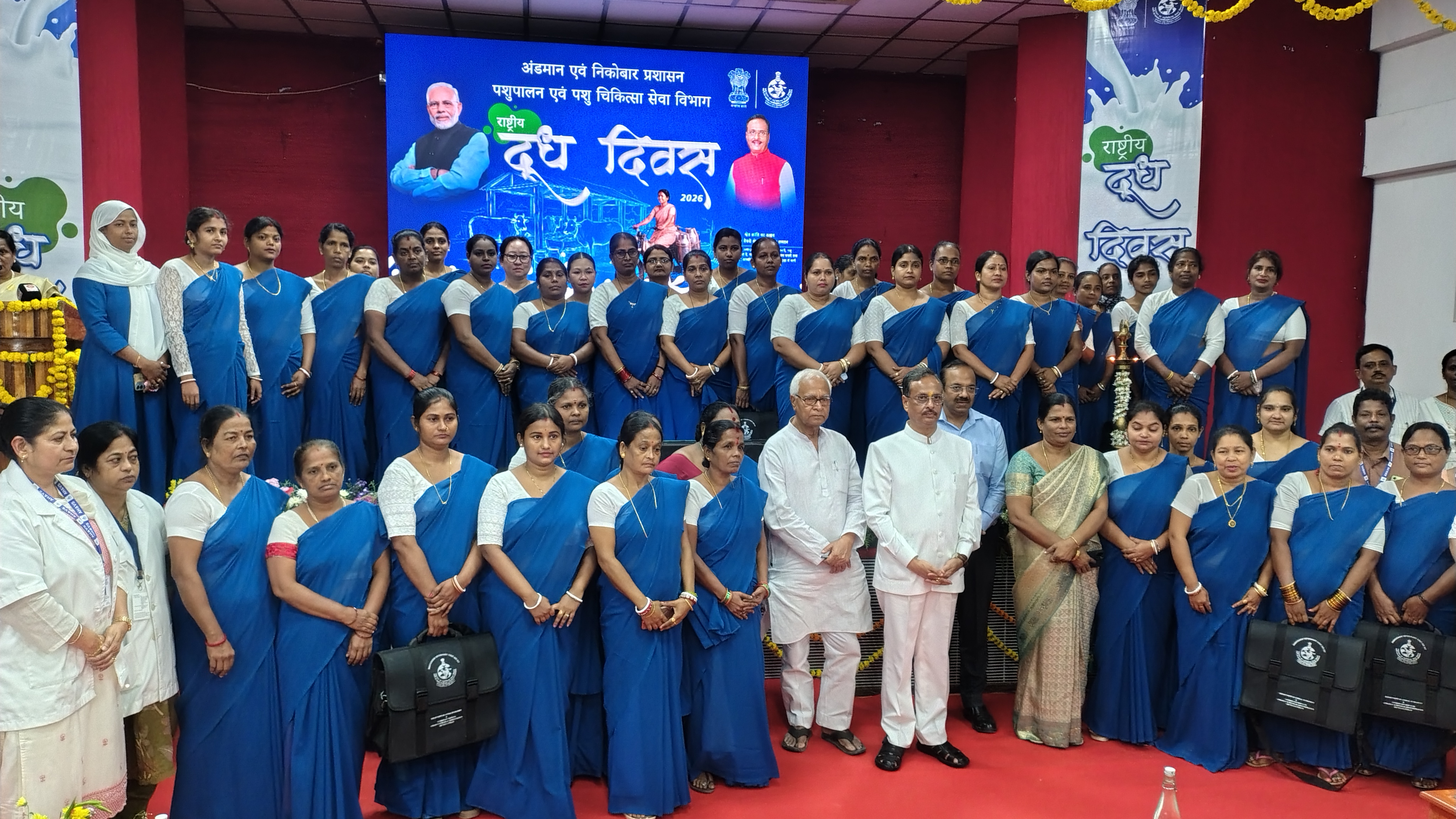
The National Milk Day programme brought together departmental initiatives on breeding improvement, animal nutrition, insurance, dairy products and rural livestock support, with the Lieutenant Governor placing particular emphasis on ensuring that the benefits of these initiatives reach livestock-owning households through sustained field-level implementation.
Source: Event recording and programme presentations. Figures and programme details are attributed to the presentations made during the event.