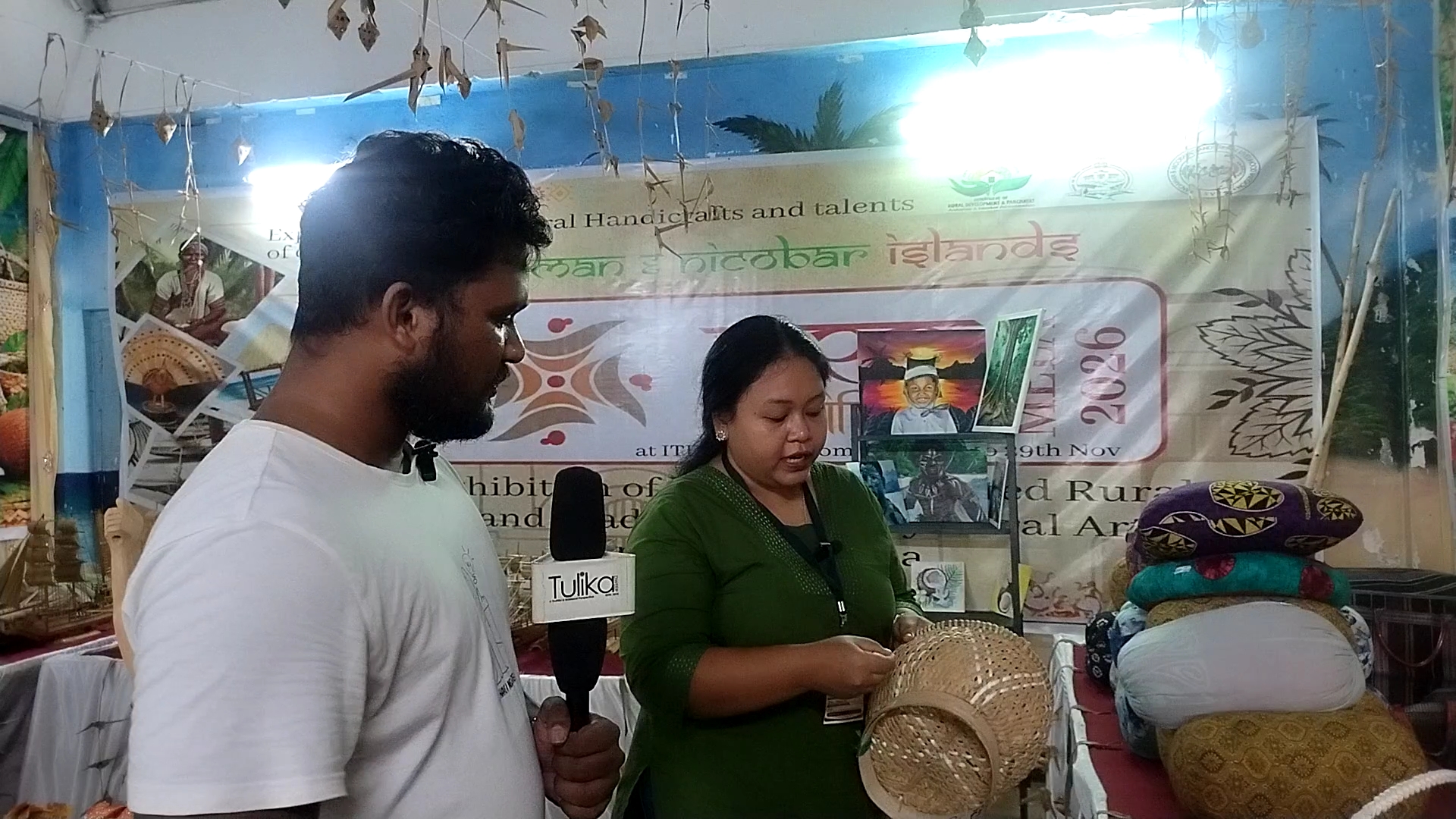
Nicobari Women Showcase Traditional Crafts and Indigenous Knowledge at SARAS Mela 2026
Three Self-Help Groups from Nancowry showcased traditional Nicobari wooden crafts, virgin coconut oil, canoes, bamboo products and woollen items at SARAS Mela 2026, while highlighting the challenges of transportation and limited local markets.
By Dweep Tulika · 28 November 2026
Traditional Nicobari craftsmanship and indigenous knowledge took centre stage at SARAS Mela 2026, where women members of three Self-Help Groups (SHGs) from Nancowry showcased handmade products reflecting the skills and everyday practices of Nicobari communities.
Organised by the Department of Rural Development and Panchayati Raj at ITF Ground, the exhibition provided a platform for the groups to display and sell their products. During a visit to the stalls, Dweep Tulika interacted with members of Ujala, Udaan and Star SHGs to understand their crafts, production methods and the challenges involved in sustaining their work.
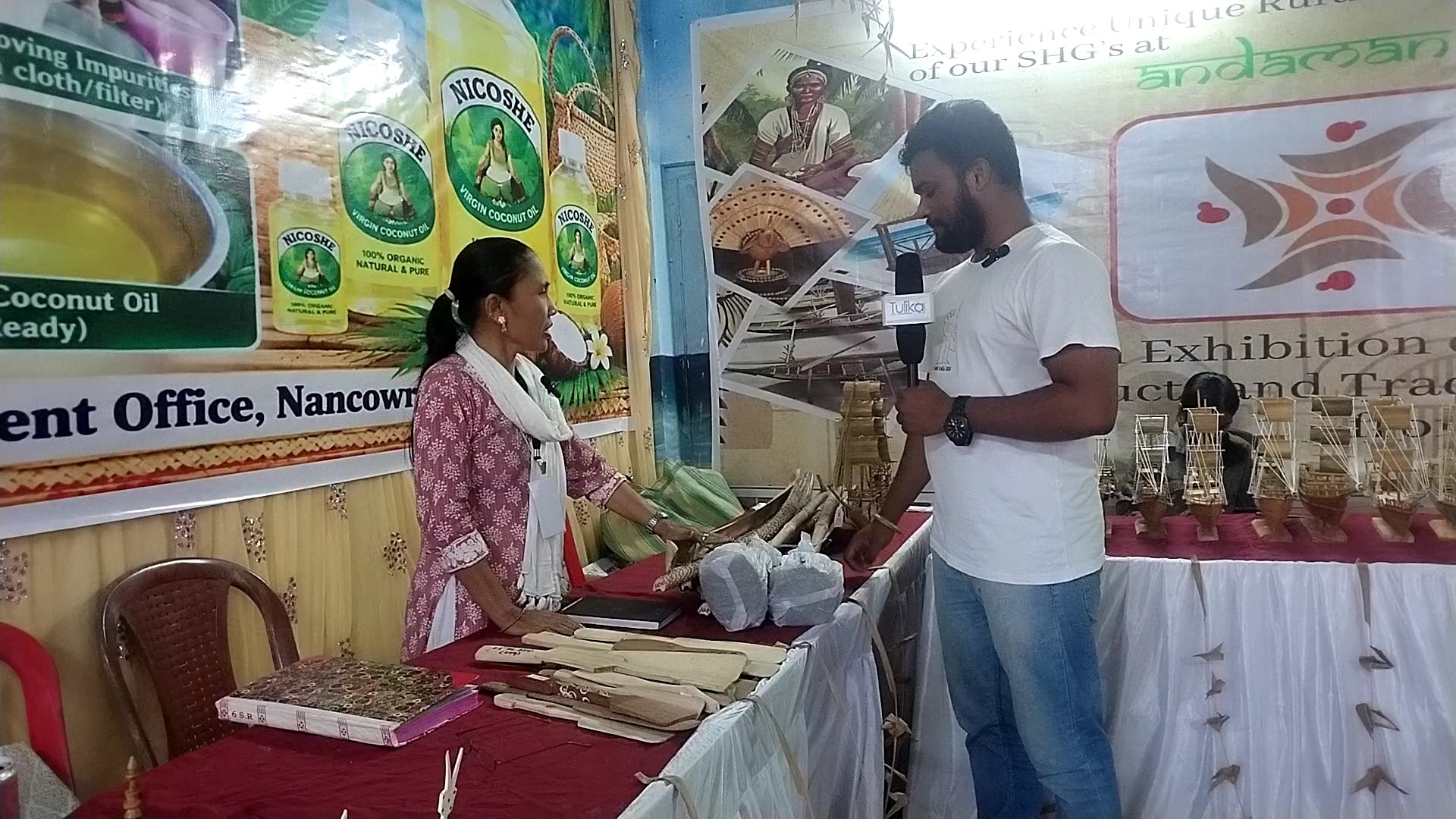
Ujala SHG displays traditional wooden household products
The Ujala Self-Help Group presented a range of wooden products, including kitchen spoons, spatulas and traditional coconut-scraping tools. The stall also displayed brooms with bamboo handles and other handmade items.
Members explained that several of these products are rooted in traditional household practices and are made using locally available natural materials. The group also undertakes the making of model boats and other wooden crafts.
Udaan SHG demonstrates traditional coconut oil preparation
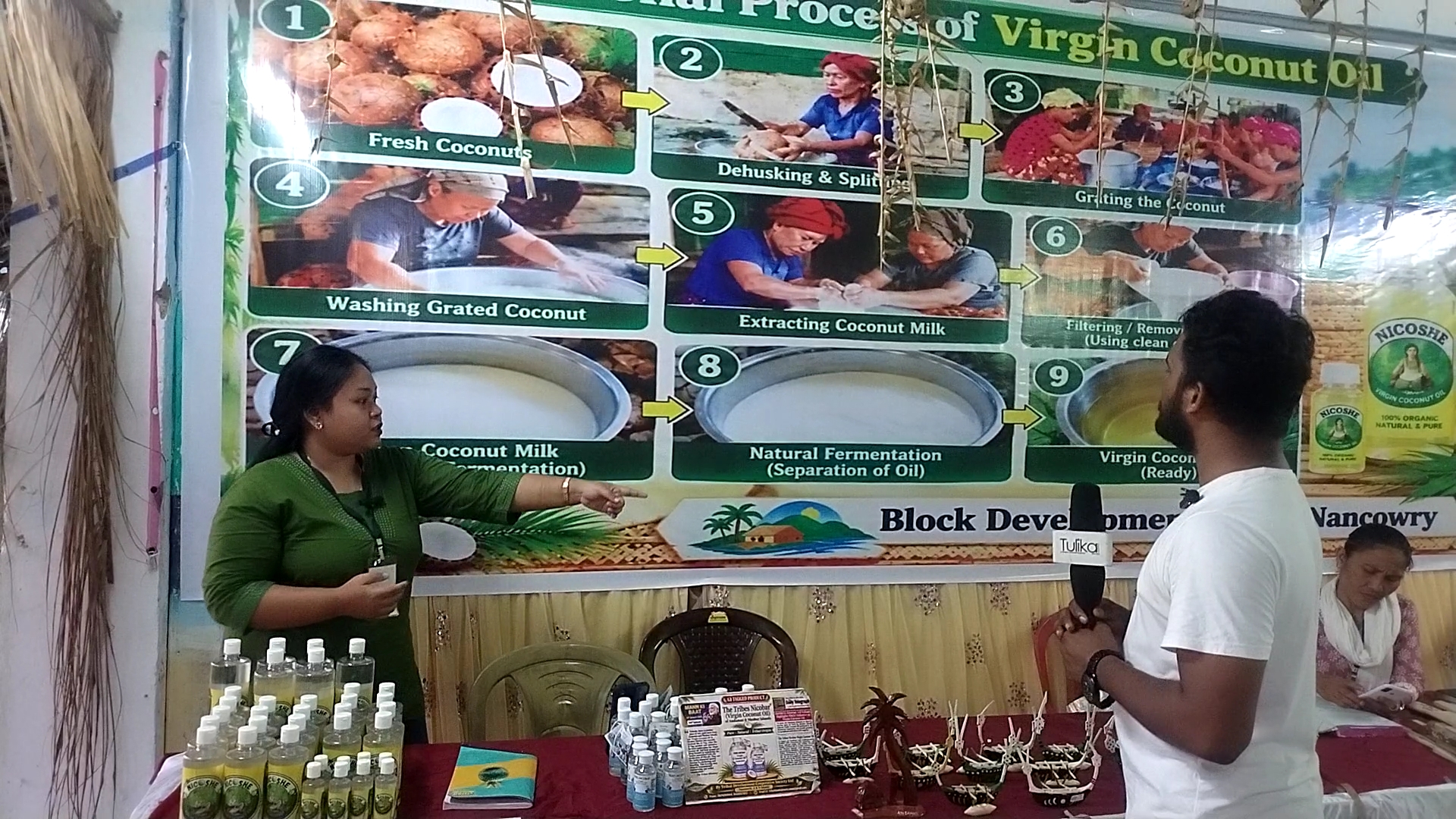
At the Udaan SHG stall, visitors were introduced to virgin coconut oil prepared through a traditional, labour-intensive process.
Members explained that the process begins with breaking coconuts and extracting and grating the kernel. The grated coconut is then squeezed to obtain coconut milk, which is filtered and left to ferment overnight. The oil is subsequently separated from the other layers.
According to the members, producing even a small quantity requires considerable manual effort. Around 25 coconuts may yield approximately half a litre to one litre of oil, depending on the quantity and quality of the raw material.
The group also showcased traditional Nicobari architectural elements, including the construction of thatched huts. Members explained how bamboo or cane and wooden supports form the basic structure, which is covered with overlapping layers of leaves to prevent rainwater from entering.
Traditional canoe-making and the Kanaya
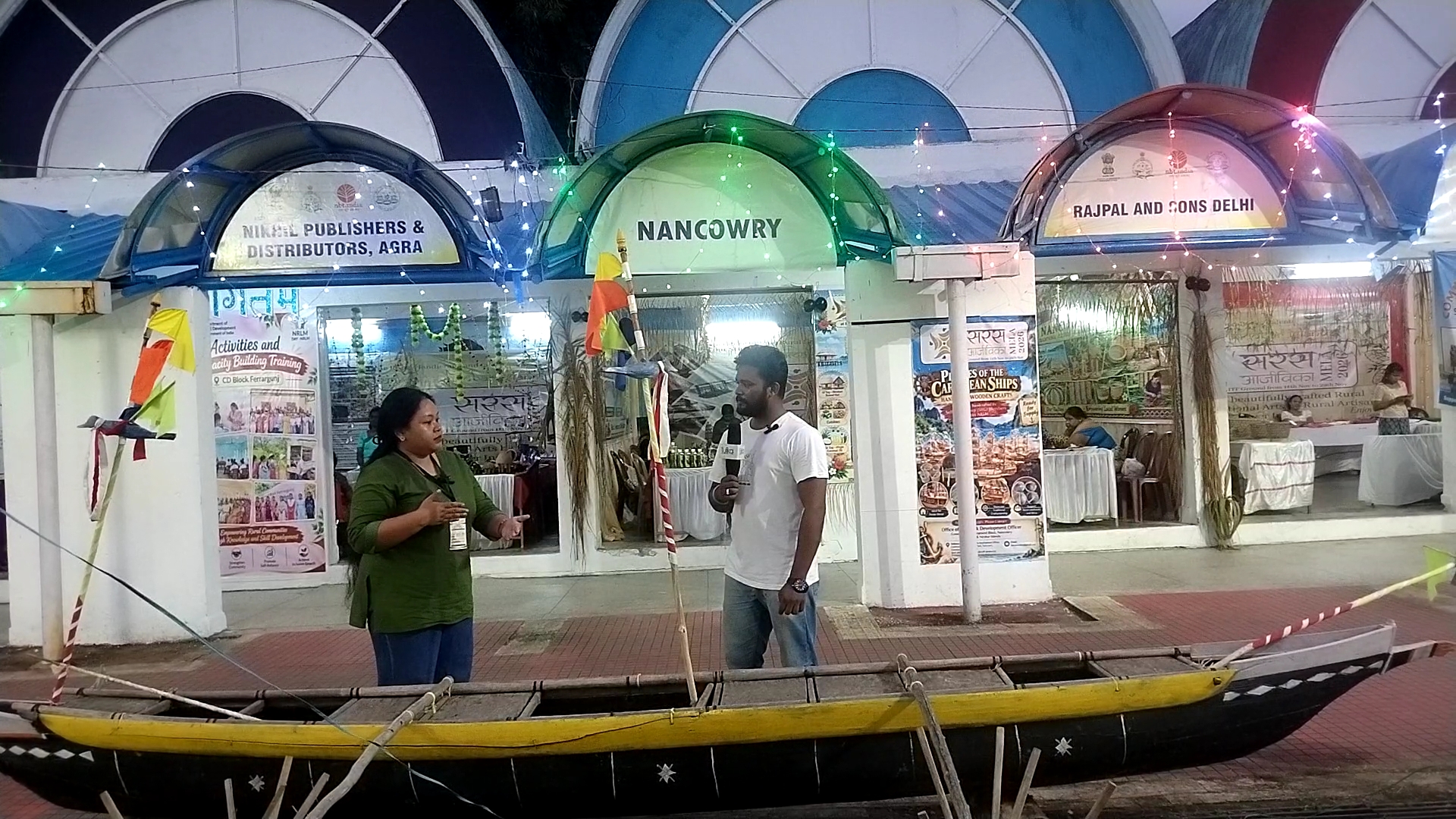
One of the distinctive exhibits at the stall was a traditional Nicobari canoe. The artisans explained that canoes are carved from selected timber by shaping a log and removing the wood from its interior.
Different designs are made for different purposes, including fishing, travel and racing. The narrower canoe displayed at the mela was described by the members as a traditional type used for fishing and movement between villages and nearby islands.
Another traditional instrument on display was the Kanaya, which members said was historically used to determine wind direction and assess wind conditions.
Before modern navigational and weather-related instruments became available, elders relied on observations of its movement to understand the direction and changes in the intensity of the wind.
Limited markets and transportation remain major challenges
The interaction also brought attention to the difficulties faced by artisans from the Nicobar group of islands.
Members said limited local sales remain a major challenge, as many households already possess similar traditional products. They also pointed to transportation costs and logistical difficulties involved in bringing bulky and delicate handmade goods to markets outside Nicobar.
Despite these constraints, the members said their participation in SARAS Mela had provided a valuable opportunity to display and sell their products. They expressed hope that more visitors would purchase their handmade items, reducing the need to transport unsold goods back to the islands.
Star SHG showcases bamboo and woollen products
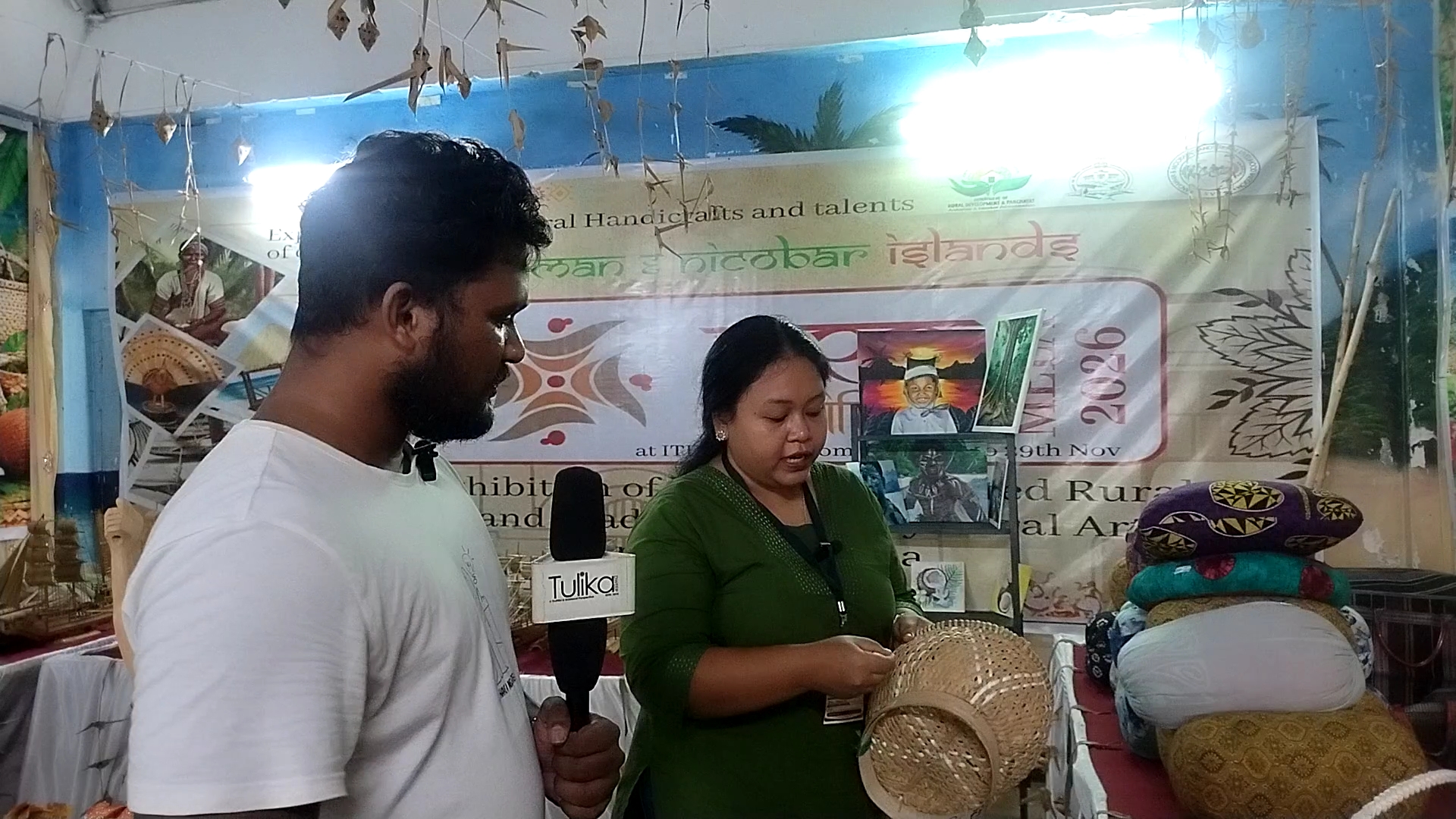
The Star Self-Help Group from Nancowry displayed woollen products, including bags, headwear and decorative wall hangings, alongside traditional bamboo crafts.
Members demonstrated how bamboo is carefully split into thin strips and shaped to make baskets. They explained that the outer layer of bamboo is used for its flexibility, allowing the strips to be woven into different forms.
The baskets can be used for carrying fruits, vegetables and other household items, offering an alternative to plastic bags and containers.
The stall also featured handmade pillows filled with locally available cotton. Members explained the preparation and drying process involved in making the filling.
Preserving traditional skills through better market access
The exhibits at SARAS Mela reflected how traditional skills continue to serve practical needs. From wooden household utensils and bamboo baskets to canoes and indigenous methods of understanding wind conditions, the products demonstrated the close relationship between craftsmanship, local resources and everyday life in Nicobari communities.
The participation of the three Nancowry SHGs also highlighted the importance of creating better market access for artisans living in geographically distant island communities.
While exhibitions such as SARAS Mela provide opportunities for visibility and sales, improved transport facilities and wider marketing opportunities remain important for sustaining these traditional livelihoods.
The artisans appealed to visitors to explore their stalls and support their work by purchasing locally made products, helping sustain the traditional crafts and skills of the Nicobar Islands.