
Student Life: A World Beyond Books
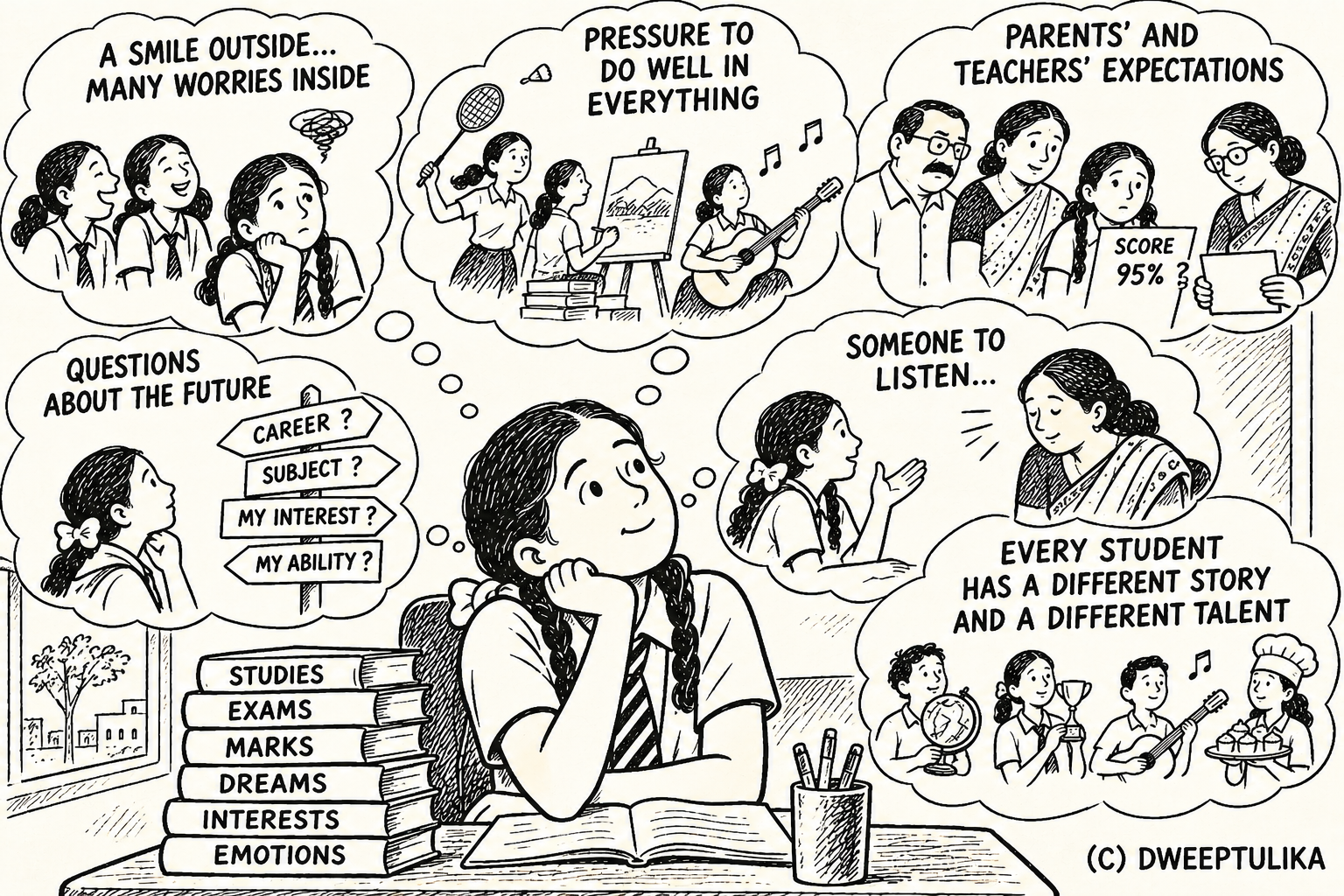
Every student has a different story, and behind every smile may be thoughts and worries that deserve to be heard.
By Nisha Kumari | Student, Class 10

1. A Smile on the Face, Many Worries in the Mind
A student may look happy from the outside, but that does not always mean they are happy from within. Their minds are often filled with questions, thoughts and worries that they cannot always express to others.
Sometimes, they want to share their feelings with their parents or friends, but wonder whether they will truly understand. Explaining what they are going through is not always easy.
So, they keep many things to themselves. They laugh with others, talk to their friends and behave normally. People may not even realise how much is going on in their minds. Behind their smiles, there may be many unspoken thoughts.
2. The Pressure to Do Well in Everything
Students are often expected to do well not only in studies but also in sports, competitions and other activities. They too want to perform well in these areas, but managing everything together is not easy.
Some students need to put more effort into their studies, while others work hard to make their mark in sports. Some are interested in music, art or writing and want to develop their talents in those fields.
When many responsibilities come together, students sometimes struggle to decide what to focus on first. They want to do everything well, but they also need to manage their time and work according to their abilities.
3. The Pressure of Parents' and Teachers' Expectations
Parents want a bright future for their children. They hope that their children will become good human beings, achieve something in life and become independent. Teachers also want to see their students succeed.
However, sometimes the pressure of meeting these expectations becomes difficult for students.
Imagine a student who is expected to score 95% in an examination. The student works hard but manages to score only 65%. Think about what might be going through that student's mind.
Perhaps the student has genuinely worked hard but still could not achieve the expected result. They may worry about what their parents will think or how their teachers will react.
In such situations, students should not be judged only by their marks. Their hard work and efforts should also be understood and appreciated.
4. Questions About the Future, Abilities and Interests
As students move into higher classes, they begin to face important decisions about their future.
What should I do next? What will I become when I grow up? Which subject should I choose? What are my real abilities? What interests me the most?
Not every student has answers to these questions immediately. Some have already planned their future, while others are still trying to understand their interests and abilities.
Sometimes, after listening to advice from different people, making a decision becomes even more difficult. They wonder whether they should follow what others want or choose a path according to their own interests.
At such times, students need time to understand themselves and choose the right path without being rushed.
5. Students Need Someone to Listen More Than Someone to Advise
Sometimes, before trying to solve a student's problem, it is important to listen to them. Students do not always need someone to tell them what to do or point out their mistakes.
At times, they simply need someone who can sit beside them and listen to everything they have to say without interrupting.
Someone should ask them, "Are you really okay? Is something troubling you?" And when they begin to share their thoughts, they should be given proper attention.
A problem may seem small to someone else, but it might mean a lot to the student experiencing it. Instead of ignoring their feelings or giving an immediate opinion, people should try to understand them.
When students feel that someone is listening and making an effort to understand them, sharing their feelings becomes easier.
6. Every Student Has a Different Story
Every student has a different story, dream and identity. Some have big dreams, while others have simple ones. Everyone has different interests and likes different things.
We often compare students on the basis of their marks, achievements and performance. But can everyone's talent really be measured by the same standard?
If one student scores good marks in an examination, it does not mean that a student who scores less has no talent. Everyone has the ability to do something different. What matters is recognising that ability and giving them an opportunity to develop it.
It is not right to consider ourselves less capable just because someone else has achieved something. Every student has their own path and their own destination.
Conclusion
In the end, student life is not limited to books, examinations and marks. It is a time to understand ourselves, discover our interests, learn from our mistakes and move forward in life.
Every student wants their efforts to be understood, their talents to be recognised and an opportunity to create their own identity.
Because every student has a different story, and every story matters.